

Photo by Rey Seven on Unsplash
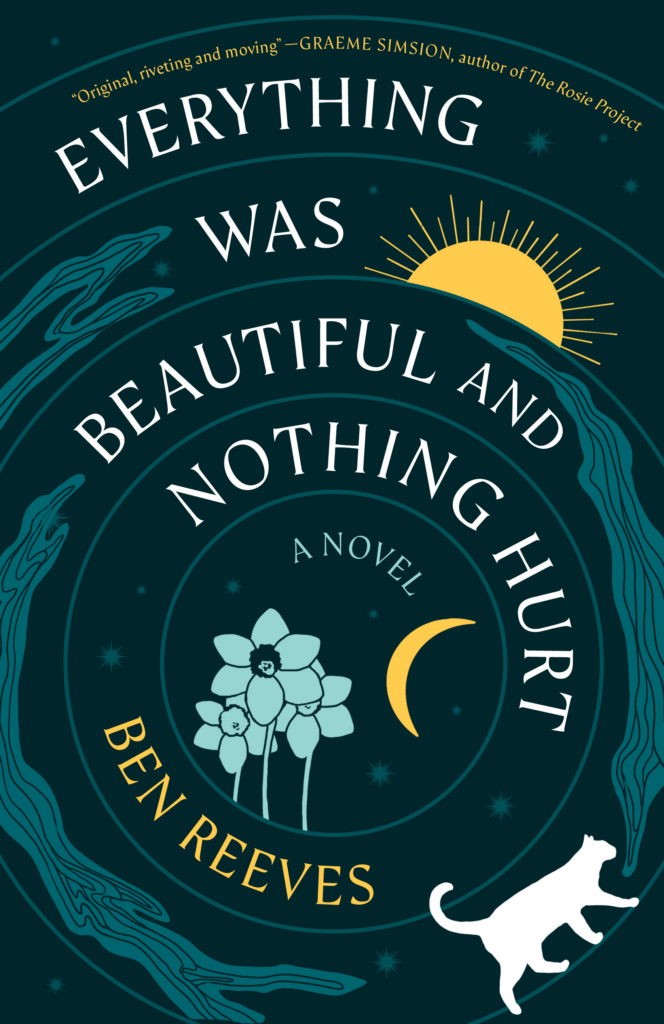
Book Synopsis
Travis is Death in the modern world. He wears jeans and a T-shirt and lives in a small, grey town. His job is to offer people comfort in their final hours of life. He’s stoic, gentle, and a little naive, despite everything he knows. He’s young and handsome, despite who he is. Each death he witnesses is meaningful to him; he listens, never judges, and most importantly, never tries to change anyone’s fate. He knows that every life must eventually end to maintain the balance of the universe and he respects the cycl
Then he meets Dalia, a midwife, and her boisterous eight-year-old daughter Layla, who live across the hall. As Dalia and Layla come to embrace Travis, it becomes more difficult to maintain the detachment that’s allowed him to function for so long. Their time together teaches him what’s truly important in life—and what might be irrevocably lost in death.
Written with radiant warmth, wisdom, and compassion, Everything Was Beautiful and Nothing Hurt is a timeless story about appreciating life, accepting its end, and finding our place in the universe—especially when it feels most impossible—that will resonate with anyone who has ever loved and lost or worried at time’s passing.
What I Liked About the Book
I was immediately drawn to this book because of the perspective. This story is told from the perspective of Death as is one of my favorite novels The Book Thief by Markus Zusak. In Reeves’ book, Death has a name; his name is Travis. Travis visits those in their final moments of their life. He doesn’t change their fate, he simply walks alongside them, holding their hand and guiding them through their final moments. I thought this was cool. Everyone should be fortunate enough to have someone to hold their hand and calmly guide them through the process of death.
Like Death in The Book Thief, Travis isn’t completely detached. He forms connections with the people he encounters, and there is a sense that he’s searching for something through these interactions. It is like he’s trying to understand why people continue to love and live despite knowing that death is waiting for us
This is a book of resilience, which after all is the theme of this blog. It is not Travis’s resilience I admire as much as other characters although he is resilient in the end. In an effort to avoid spoilers, that is all I will say here. I do like Travis’s character. He witnesses love, loss, memories, and ordinary moments, but he is always outside of those moments. He is gentle, lonely, curious, and almost envious of human experiences. I feel like he would agree with Death’s assessment in The Book Thief when he says, “I am haunted by humans.”
I loved the times when the writing was beautiful and lyrical.
“The mayflies, sweeping as one through the air, testing out their loops and dives, they realize this is it. This is what it was building to, this whole time. This one day. These few hours. We are here to dance, to meet, and then we’re gone. We have no mouths from which to eat – we were never meant to last. We are here for this one sacred moment. That’s all it ever was.“
I wanted more of this.
What I Didn’t Love About the Book
I didn’t love all of the narration choices in this book. The shifts in perspective reflect Travis’s unusual relationship with time and identity and I get that because he exists outside the human experience, but I found the constant shifts between third person and first person narration within the same paragraph or scene to be distracting. These transitions didn’t feel seamless. There is one scene where an elderly woman is trying to boil water for tea. The scene begins in third person, as Death describes the scene to us though he isn’t there with her. When he arrives at her home and she opens the door for him, it suddenly shifts into first person. Yes, he is meant to be an omnipresent narrator but it felt awkward to me.
Then later, there are moments when the narration switches to second person, particularly when Death refers to Dalia. The intent was to create intimacy, but the technique created more distance for me because I couldn’t always understand whose perspective I was following. I felt more than ever that Travis remains an observer rather than a participant which I guess is kind of the point. It was just distracting for me.
I think my biggest issue was that the pacing just felt off. The stories are engaging, but I felt like we were running from one into the next. It seemed like a chaotic stream of consciousness story and it left the me with little time to absorb the emotional weight. I just wanted to sit with some of those moments and let them wash over me. I wanted more space to process the characters, their losses, and the meaning behind certain things.
It probably sounds like I didn’t like the book and that isn’t accurate; it was a good read for me and I appreciated what the author was trying to do. I just think it could have been so much stronger. Maybe the issue is that I love The Book Thief so much and this book suffered a bit by comparison. The writing in Zusak’s book is just so much more powerful.
What Can I Take From This To Help Improve My Writing Craft?
What I take from this is that pacing is so important and it needs to match the “vibe”. If I want to evoke a specific emotion from the reader, I need to be mindful of that, using pacing that matches the desired outcome. I don’t know that I will ever write Death as a character, but I am reminded that there is something engaging about a unique character that hasn’t shown up a thousand times before. I am interested in writing a historical fiction novel about a little known female heroine who exemplifies resilience. If you have suggestions, please let me know.
Everything Was Beautiful and Nothing Hurt gets 🌟🌟🌟🌟
for originality and a story that is emotional in the best possible way.